Contact Info

Contact us for support

+91 72111 78917
Contact Us

Ovum donation

Ovum donation, also known as egg donation, is a process where a woman (the egg donor) donates her eggs to another woman (the recipient) for the purpose of achieving pregnancy. Ovum donation can be used by women who have difficulty producing their own eggs, either due to age, medical conditions, or genetic disorders.


The process of ovum donation typically starts with the egg donor undergoing a controlled ovarian stimulation (COS) to stimulate the production of multiple eggs. The eggs are then retrieved using a procedure called transvaginal oocyte retrieval (TVOR), which is similar to a minor surgical procedure, performed under sedation or general anesthesia. The retrieved eggs are then fertilized with sperm from the recipient’s partner or a sperm donor, and the resulting embryos are transferred to the recipient’s uterus.


Ovum donation can be beneficial to women experiencing:

  • Premature ovarian failure.
  • Genetic disorders can affect their unborn.
  • Menopause
  • Same-sex couples and single women who wish to have a biological child.


It’s important to consider the emotional and psychological aspects of using a donated egg and the possible genetic, legal, and social implications. It is recommended to consult with a fertility specialist and a counselor to discuss the best options for you.


For information or consultation, book an online appointment today!

Ovulation Induction Protocols

Ovulation induction is a fertility treatment that helps women who have difficulty ovulating or who have irregular menstrual cycles to produce eggs. The goal of ovulation induction is to stimulate the ovaries to produce multiple eggs, which increases the chances of conception.


There are several different ovulation induction protocols that can be used, depending on the woman’s specific needs and medical history.


However, ovulation induction protocols may have side effects and risks, including the possibility of multiple pregnancies, ovarian hyperstimulation syndrome (OHSS), and birth defects. It’s important to consult a fertility specialist who can recommend the best protocol for your individual case and monitor you throughout the process.


If you are looking for such a consultation, then book an online appointment at Orkid today!

Oocyte cryopreservation

Oocyte cryopreservation, also known as egg freezing, is a procedure that involves freezing a woman’s unfertilized eggs for future use. This allows a woman to preserve her fertility and have the option to use her own eggs to achieve pregnancy at a later time.


The process of oocyte cryopreservation typically starts with a woman undergoing controlled ovarian stimulation (COS) to stimulate the production of multiple eggs. The eggs are then retrieved using a procedure called transvaginal oocyte retrieval (TVOR), which is similar to a minor surgical procedure, performed under sedation or general anesthesia.


Once the eggs are retrieved, they are immediately frozen using a process called vitrification. Vitrification is a rapid freezing process that helps to prevent ice crystal formation, which can damage the eggs. The eggs are stored in liquid nitrogen at a temperature of -196 degrees Celsius.


Oocyte cryopreservation can be beneficial for women who want to preserve their fertility for various reasons, such as career or personal plans, medical conditions that may affect fertility, or undergoing treatments that may damage the ovaries.


The success rate of pregnancy with cryopreserved eggs varies depending on factors such as the woman’s age at the time of freezing, the number of eggs frozen, and the quality of the eggs. 


Our experienced doctors at Orkid can help you find the best option for you!

MACS

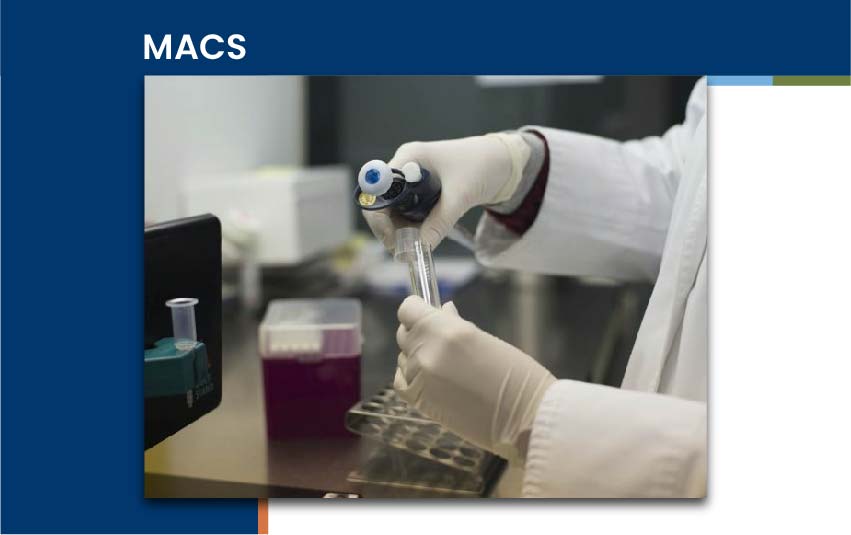
Magnetic-activated cell sorting (MACS) is a method used to isolate and purify specific cell populations from a mixture of cells. The method uses magnetic beads that are coated with antibodies that bind to specific cell surface markers on the cells of interest. The cells are first labeled with these antibodies and then passed through a column containing the magnetic beads. The cells bound to the magnetic beads are then pulled away from the mixture by a magnetic field, while the unbound cells pass through the column. This method is commonly used to isolate cells for downstream applications such as flow cytometry, PCR, and cell culture. It has also been used to purify cells for gene therapy and regenerative medicine.


For more information or consultation, book an online appointment today!

IVM

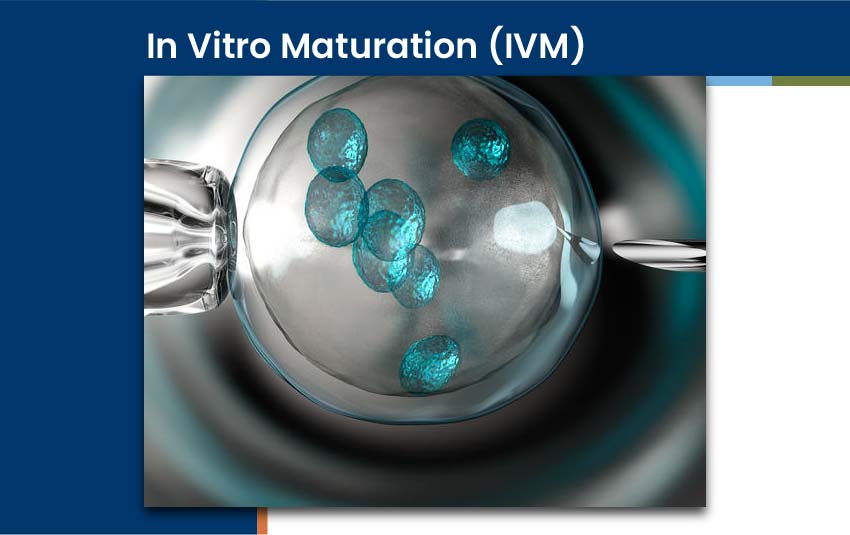
With the help of advanced technology in In Vitro Maturation in association with In Vitro Fertilization (IVF), our doctors are able to collect a woman’s immature eggs. We term this process as In Vitro Fertilization with maturation. IVM procedure increases a woman’s chances of using her few immature eggs for fertilization.


In Vitro Maturation(IVM) Process

The woman’s immature eggs are surgically removed and then put in a petri dish with a particular maturation medium at the state-of-the-art IVF facility of Orkid in Surat. As the eggs fully mature outside of the woman’s body, they are then closely watched. Intracytoplasmic Sperm Injection is a method of fertilization where one sperm is injected into each individual egg (ICSI). The resultant embryos are cultivated for a few more days until they have reached a stage where they are transferable and viable. For fresh IVF transfer or cryopreservation, only the best embryos are chosen.


In Vitro Maturation Success Rates

Usually, women under 30 have the highest chances of producing multiple egg follicles to be recollected before maturity. As with all infertility treatment protocols, pregnancy success rates are lower for women in their advanced maternal years (over 35). As these women are not good candidates for IVM in association with IVF because of a lower fertility rate. However, this doesn’t discount everyone, thus it’s important to consult whether this treatment is right for you or not. 


To find out whether you are eligible or not, book an appointment today!

Multiple IVF / IUI Counselling

Multiple IVF / IUI Counselling

Clarity, Strategy & Confidence After Repeated IVF or IUI Failures

At Oorkid Hospital & IVF Centre, we offer specialised IVF and IUI failure counselling in Surat for couples who have experienced unsuccessful fertility treatments and are seeking clear answers before their next step.

When IVF or IUI cycles fail repeatedly, the most common question is: “What are we missing?” Instead of continuing treatment without direction, our counselling focuses on identifying gaps, understanding outcomes, and planning a smarter, evidence-based approach.

This is not about blaming the body—it’s about finding the right strategy with clarity and confidence.

What Is Multiple IVF / IUI Counselling?

Multiple IVF/IUI counselling is a detailed review and analysis of previous fertility cycles to understand why treatments may not have succeeded and what can be improved moving forward.

We evaluate medical, biological, and lifestyle factors that may influence outcomes and guide you toward the most appropriate next steps.

What We Cover in IVF / IUI Failure Counselling

  • Cycle-by-cycle review of previous IVF or IUI treatments
  • Understanding what worked and what did not
  • Possible causes of repeated failure (medical and timing-related)
  • Assessment of embryo quality and development factors
  • Evaluation of uterine health, lining, and implantation readiness
  • Hormonal response and stimulation protocol analysis
  • Sperm quality and male factor considerations
  • Lifestyle and external factors affecting success rates
  • Recommended tests or further evaluations if required
  • Emotional support and clarity in decision-making

Common Reasons for IVF or IUI Failure

Fertility treatment outcomes can be influenced by multiple factors, including:

  • Embryo quality or genetic factors
  • Uterine lining or implantation issues
  • Hormonal imbalances
  • Timing of ovulation or embryo transfer
  • Sperm-related factors
  • Underlying medical conditions

Identifying the right cause is essential before proceeding with another cycle.

Who Should Consider Multiple IVF / IUI Counselling?

This counselling is recommended for:

  • Couples with 2 or more failed IUI cycles
  • Failed IVF cycles or repeated implantation failure
  • Couples feeling emotionally exhausted or confused
  • Those seeking a second opinion before continuing treatment

Second Opinion for IVF Treatment

Getting a second opinion for IVF can provide new insights and alternative strategies. At Oorkid, we review your previous reports objectively and suggest improvements or changes where needed.

This helps avoid repeating the same approach without addressing underlying concerns.

Emotional Support & Decision Clarity

Repeated fertility treatment failures can be emotionally overwhelming. Our counselling also focuses on:

  • Managing stress and emotional burnout
  • Setting realistic expectations
  • Making informed and confident decisions

Why Choose Oorkid for IVF Failure Counselling in Surat?

  • Women-led care team with 99% female staff
  • Experienced fertility specialists and IVF experts
  • Detailed and honest cycle evaluation
  • Evidence-based treatment planning
  • Personalised approach for each couple
  • Transparent communication and guidance
  • Emotional support alongside medical expertise

Frequently Asked Questions (FAQs)

How many IVF failures are considered repeated failure?

Generally, two or more failed IVF cycles may require a detailed evaluation and revised strategy.

Can IVF failure be prevented?

While not all failures can be prevented, identifying and addressing underlying factors can improve success rates.

Should I change my fertility clinic after failed IVF?

A second opinion can help you decide whether a different approach or centre may be beneficial.

What tests are needed after failed IVF?

Tests depend on individual history and may include hormonal evaluation, uterine assessment, or genetic testing.

Is it safe to try IVF again after failure?

Yes, but it is important to understand previous outcomes and plan the next cycle carefully.

Plan Your Next Step with Confidence

If you are dealing with repeated IVF or IUI failure and need expert guidance, Oorkid Hospital & IVF Centre offers the clarity and direction you need before moving forward.

Book your Multiple IVF / IUI Counselling session today.
Because the right strategy makes all the difference.

Intrauterine Insemination

Intrauterine Insemination or IUI is a small procedure where the sperm is directly inserted into the uterus with the help of a small catheter. This procedure increases the chances of conceiving by helping the sperm reach the fallopian tubes while the woman is most fertile. 


Who can benefit from IUI?

  • Infertility in couples due to any medical condition
  • Unexplained infertility 
  • Same gender couple 
  • An individual wishing to start a family with donor sperm. 


IUI is a common treatment option as it is simply done at our clinic and is a less intrusive, more affordable option compared to In Vitro Fertilization (IVF).

IMSI

Intracytoplasmic Morphologically-Selected Sperm Injection (IMSI) is a technique used in assisted reproduction, specifically In vitro fertilization (IVF) procedures. It is a form of intracytoplasmic sperm injection (ICSI) in which the sperm is examined at high magnification before being injected into the egg. The goal of IMSI is to improve the chances of fertilization and pregnancy by selecting sperm that have the best morphology (shape and structure) for injection. This technique is typically used in cases where there is a high degree of sperm abnormality or where previous IVF attempts have failed.

ICSI

The head of the sperm must cohere to the outside of the egg before it may fertilize a woman’s egg. After the sperm gets attached, the sperm pushes to the interior of the egg where fertilization takes place. 


The sperm occasionally fails to pierce the outer layer for a variety of causes. The sperm might not be able to swim either due to the egg’s thick outer layer or penetrate. In many cases, intracytoplasmic sperm injection, often known as ICSI, could be used in combination with In Vitro Fertilization (IVF) to help in fertilizing the egg. 


Using specialized micromanipulation tools, equipment, and inverted microscopes, embryologists can choose and collect individual sperm in a specially made ICSI needle during IVF with ICSI.

The sperm is injected into the inside (cytoplasm) of the egg after the needle has carefully advanced through the egg membrane and outer shell.


The sperm is injected into the inside (cytoplasm) of the egg after the needle has carefully advanced through the egg membrane and outer shell.


To acquire several eggs for ICSI and in vitro fertilization, the woman must first be stimulated with medication and undergo an egg retrieval process.


The “standard of care” in this field of medicine does not, however, specify which situations call for the ICSI procedure and which do not.


It is used in certain clinics in every situation, whereas in others it is only used in extreme situations of male factor infertility. Between these two extremes, around half of all IVF clinics fall.


We now execute more ICSI operations than we did six to seven years ago, reflecting our evolving attitudes on the method (as a percentage of all cases). We will develop our concepts as we learn more about methods for helping couples conceive.


Anyone can experience infertility, but thankfully, our doctors can assist you in exploring the options so you can realize your goal.


Frozen transfer

A frozen embryo transfer generally occurs 6-8 weeks after the embryo is frozen. The FET date is timed to coincide with the cycle to maximize implantation, and the patient is given drugs to resemble a natural menstrual cycle when she is ready to be transferred.


A FET is necessary if a patient wants her embryos evaluated for genetic problems. A short time after egg extraction, preimplantation genetic testing (PGT) is carried out. The embryo is biopsied (a little sample is extracted from the embryo), and the DNA from that sample, which includes the embryo’s DNA, is examined for chromosomal and genetic anomalies. Once the collection is completed, it becomes easy for embryologists to select only chromosomally normal embryos for transfer. By selecting normal embryos the chances of healthy pregnancy improve.


If you are ready to begin your fertility treatment and would like to learn more about frozen embryo transfers, contact us to schedule an appointment.