Contact Info

Contact us for support

+91 72111 78917
Contact Us

Obstetrics Sonography

A center for obstetric sonography, also known as a prenatal ultrasound center, is a specialized facility that provides ultrasound services to expectant mothers during pregnancy. These services include routine prenatal scans and more detailed evaluations to assess the growth, development, and health of the fetus.

At Orkid hospital, our center for obstetric sonography is staffed by highly trained and experienced sonographers and obstetricians who use state-of-the-art ultrasound equipment to produce high-resolution images of the fetus. Our center offers a wide range of ultrasound services, including:

Routine obstetric scans: These scans are performed at regular intervals throughout pregnancy to monitor the growth and development of the fetus, assess the position of the placenta, and check for any abnormalities or complications.

Detailed obstetric scans: These scans are performed at specific times during pregnancy, such as in the first trimester, to assess the health of the fetus in more detail and check for any chromosomal abnormalities or structural defects.

3D and 4D ultrasound: These types of ultrasound create three-dimensional and four-dimensional images of the fetus, respectively, which can provide more detailed images of the fetus’s face, hands, and feet.

Obstetric sonography is a safe and non-invasive procedure that is widely used to monitor the health and development of the fetus during pregnancy. At Orkid hospital, our center for obstetric sonography is dedicated to providing expectant mothers with the highest level of care and support throughout their pregnancy.

If you are pregnant and have been referred for obstetric sonography, you can expect the highest quality care at Orkid hospital. For more information, mail us at [email protected]

Infertility Sonography

Infertility sonography, also known as reproductive ultrasound, is a diagnostic tool used to evaluate reproductive organs and diagnose causes of infertility. The procedure uses high-frequency sound waves to create images of the uterus, ovaries, and fallopian tubes, which are then used to assess the condition of the reproductive organs and identify any abnormalities that may be causing infertility.


At Orkid hospital, our infertility sonography services are performed by trained and experienced sonographers who use state-of-the-art ultrasound equipment to produce high-resolution images. The procedure is typically performed on an outpatient basis and does not require any anesthesia.

There are several types of infertility sonography, including:

  • Transvaginal ultrasound: A small probe is inserted into the vagina to create images of the uterus and ovaries.
  • Transabdominal ultrasound: A transducer is placed on the abdomen to create images of the reproductive organs.
  • Hysterosalpingography (HSG): A special dye is injected into the uterus and fallopian tubes, which can be visualized with an X-ray to check for blockages or abnormalities.

Infertility sonography can help diagnose conditions such as polycystic ovary syndrome (PCOS), endometriosis, fibroids, and pelvic inflammatory disease (PID), as well as identify problems with ovulation or sperm quality.

If you and your partner are experiencing difficulty conceiving, then Orkid’s sonography with the latest technology-equipped equipment can help guide your treatment options and increase your chances of having a baby.

Gynaec Sonography

Gynecological sonography, also known as gynecological ultrasound, is a diagnostic procedure that uses high-frequency sound waves to create images of the female reproductive organs, including the uterus, ovaries, and fallopian tubes. The procedure is used to assess the condition of the reproductive organs and identify any abnormalities that may be causing gynecological problems.


At Orkid hospital, our gynecological sonography services are performed by trained and experienced sonographers who use state-of-the-art ultrasound equipment to produce high-resolution images. The procedure is typically performed on an outpatient basis and does not require any anesthesia.


There are several types of gynecological sonography, we offer at our hospital, some of which are listed below:


  • Transvaginal ultrasound: A small probe is inserted into the vagina to create images of the uterus and ovaries. This type of ultrasound is particularly useful for evaluating the endometrium (lining of the uterus) and the ovaries.


  • Transabdominal ultrasound: A transducer is placed on the abdomen to create images of the reproductive organs. This type of ultrasound is used to evaluate the uterus and ovaries when they are too deep to be visualized with transvaginal ultrasound.


  • 3D and 4D ultrasound: These types of ultrasound create three-dimensional and four-dimensional images of the reproductive organs, respectively, which can provide more detailed images of the uterus and ovaries.


  • Gynecological sonography can help diagnose conditions such as ovarian cysts, endometriosis, fibroids, and pelvic inflammatory disease (PID), as well as monitor the growth and development of a pregnancy.


At Orkid hospital gynaec sonography is generally safe and well-tolerated, and the results can help guide your treatment options and ensure the best possible outcome.


Surrogacy

Surrogacy Services in Surat – Government Licensed & Ethical Care

Oorkid Hospital & IVF Centre is a government licensed surrogacy center in Surat,
offering ethical, regulated, and legally compliant surrogacy services as per prevailing Indian laws.

Surrogacy is a deeply emotional and life-changing journey. At Oorkid, we provide structured medical guidance,
transparent processes, and compassionate counselling to intended parents who are medically eligible for surrogacy.

What is Surrogacy?

Surrogacy is a fertility treatment in which another woman carries and delivers a baby for intended parents
when pregnancy is medically not possible or unsafe for the mother.

In India, surrogacy is strictly regulated under the Surrogacy (Regulation) Act.
Only eligible couples can opt for surrogacy under specific medical indications.

At Oorkid, we follow all legal and ethical protocols, ensuring safety and compliance at every step.

When is Surrogacy Recommended?

Surrogacy may be considered in cases such as:

  • Absence of uterus (congenital or surgical removal)
  • Severe uterine abnormalities
  • Recurrent implantation failure
  • Multiple pregnancy losses
  • Medical conditions where pregnancy is life-threatening
  • Failed IVF due to uterine factors

Each case is evaluated carefully before proceeding.

Why Choose Oorkid Hospital for Surrogacy in Surat?

  • Government Licensed Surrogacy Center
  • Women-led care team with majority female staff
  • Experienced IVF and reproductive specialists
  • Complete fertility evaluation under one roof
  • Transparent counselling and legal guidance
  • Ethical and regulated approach
  • Emotional support throughout the journey

We ensure the entire process follows government regulations and medical ethics strictly.

Our Surrogacy Process

At Oorkid, the process includes:

  1. Medical eligibility assessment
  2. Detailed fertility evaluation
  3. Legal documentation as per law
  4. IVF procedure and embryo transfer
  5. Pregnancy monitoring and high-risk care
  6. Delivery planning and structured follow-up

Every step is conducted with confidentiality and professionalism.

Legal & Ethical Compliance

As a government licensed surrogacy center, Oorkid:

  • Follows all provisions under Indian surrogacy laws
  • Ensures proper documentation and approvals
  • Conducts procedures only when legally eligible
  • Maintains medical transparency and ethical practice

We do not promote or support commercial surrogacy beyond the legal framework.

Emotional Support & Counselling

Surrogacy is not only medical—it is emotional. We provide:

  • Fertility counselling
  • Psychological support
  • Pre-treatment guidance
  • Family consultation when required

Our goal is to make the journey structured, safe, and dignified.

Frequently Asked Questions

Is Oorkid a government approved surrogacy centre?

Yes, Oorkid Hospital & IVF Centre is a government licensed surrogacy center and follows all regulatory guidelines.

Who is eligible for surrogacy in India?

Eligibility is determined as per Indian law and medical criteria. Our team evaluates each case carefully.

Is surrogacy safe?

When conducted under proper medical supervision and legal compliance, surrogacy is a structured and safe process.

How long does the surrogacy process take?

Timelines vary based on medical factors and legal procedures.

Book a Surrogacy Consultation in Surat

If you believe surrogacy may be the right option for you, our fertility team is here to guide you with clarity and compassion.

Book Your Surrogacy Consultation Today

Surgical Sperm Retrieval

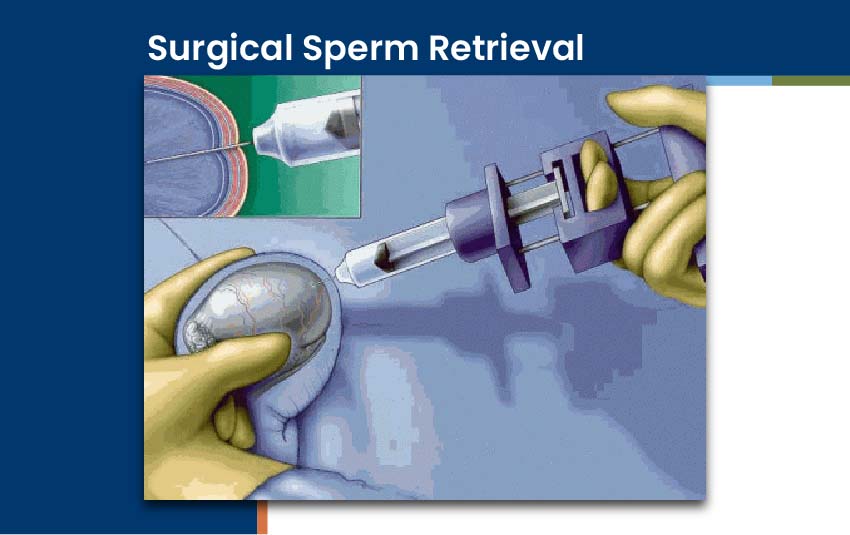
Surgical sperm retrieval (SSR) is a procedure used to obtain sperm from men who have a blockage or absence of the vas deferens, the tube that carries sperm from the testicles to the urethra. This blockage can be caused by a variety of factors, including genetic disorders, previous surgeries, or injury. SSR can also be used to retrieve sperm from men who have very low sperm counts or poor sperm motility.


There are several different techniques used for SSR, including:

  1. Testicular sperm extraction (TESE): This procedure involves removing a small sample of tissue from the testicles and searching for sperm in the tissue.
  2. Percutaneous epididymal sperm aspiration (PESA): This procedure involves using a needle to remove sperm from the epididymis, the coiled tube that sits on top of the testicles.
  3. Microsurgical epididymal sperm aspiration (MESA): This procedure involves making a small incision in the scrotum and using a microscope to remove sperm from the epididymis.
  4. Testicular sperm aspiration (TESA): Similar to TESE, but done with an aspiration needle instead of a surgical incision.


Once the sperm has been obtained, it can be used in assisted reproductive technologies such as in vitro fertilization (IVF) or intracytoplasmic sperm injection (ICSI) to help a couple achieve pregnancy.


Our experienced doctors at Orkid can diagnose and help you find the right treatment for you.


Book an online appointment today!

Semen freezing

Semen freezing is a process by which sperm cells are frozen in order to preserve their viability. This technique is often used for fertility preservation, allowing individuals to store their sperm for future use. Semen freezing is also used for medical purposes, such as preserving sperm from donors for use in artificial insemination.


The process of semen freezing begins with a semen sample being collected and analyzed for quality. The sample is then placed into a special container and frozen using liquid nitrogen or other cryopreservation techniques. The sperm cells are then stored in a sperm bank or fertility clinic. The frozen sperm can remain viable for many years, although there is some loss of fertility over time.


Overall, semen freezing is a safe and effective way to preserve fertility and help individuals achieve their family-planning goals. While the process is somewhat complex, it can provide peace of mind to those who want to ensure that their fertility options remain available in the future.


Want to know about semen freezing, feel free to call Orkid and get every question answered.

Semen Donation

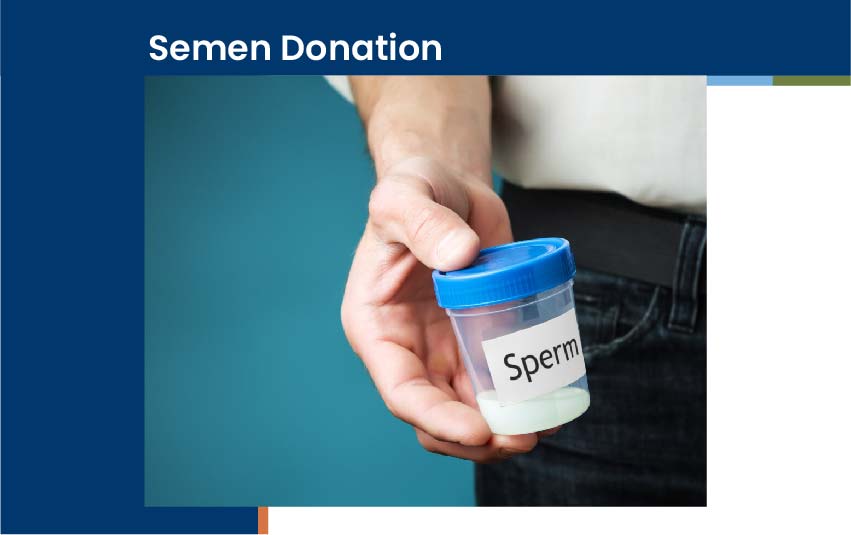
Semen donation is a process in which a man anonymously donates his sperm to a sperm bank or fertility clinic. This process can help infertile couples have biological children. The process of donating semen involves an extensive screening process to ensure that the donor meets all safety and health requirements. Donors must provide a detailed medical and family history, as well as undergo blood tests and other tests to ensure that they have no genetic or infectious diseases. Once a donor is accepted, they will typically provide samples of their semen on a regular basis. The semen is then quarantined and frozen for use in artificial insemination.


Semen donation is a generous act that helps many couples become parents. It is important for potential donors to understand what is involved in the process, and to make sure that they are comfortable with the medical and legal implications of donating their semen.


Be the reason behind an infertile parent’s smile, by donating sperm. Contact Orkid’s team for more information regarding sperm donation.

Semen Analysis

A semen analysis is a test that evaluates the quality and quantity of a man’s semen and sperm. The test is typically performed as part of a fertility evaluation or when a man is experiencing difficulty with conception. During a semen analysis, a man will be asked to provide a sample of semen, which is usually collected by masturbation, and the semen is then sent to a laboratory for analysis.


The laboratory will examine the semen sample under a microscope to evaluate the following parameters:

  • Volume: The amount of semen in the sample
  • Liquefaction: The time it takes for the semen to become a liquid consistency
  • pH: The acidity or alkalinity of the semen
  • Sperm count: The number of sperm per milliliter of semen
  • Motility: The percentage of sperm that are moving and the percentage that is progressive (moving forward)
  • Morphology: The percentage of sperm that have a normal shape
  • White blood cell count: The number of white blood cells in the semen, which can indicate an infection


It’s important to note that semen analysis results may vary from one sample to another. 


Therefore, our experts at Orkid, recommend every man have two to three semen analyses performed over a period of time, to get a more accurate picture of their sperm health.


If you are searching for semen analysis in Surat then we are just a call away!

Reproductive Surgeries In Male & Female

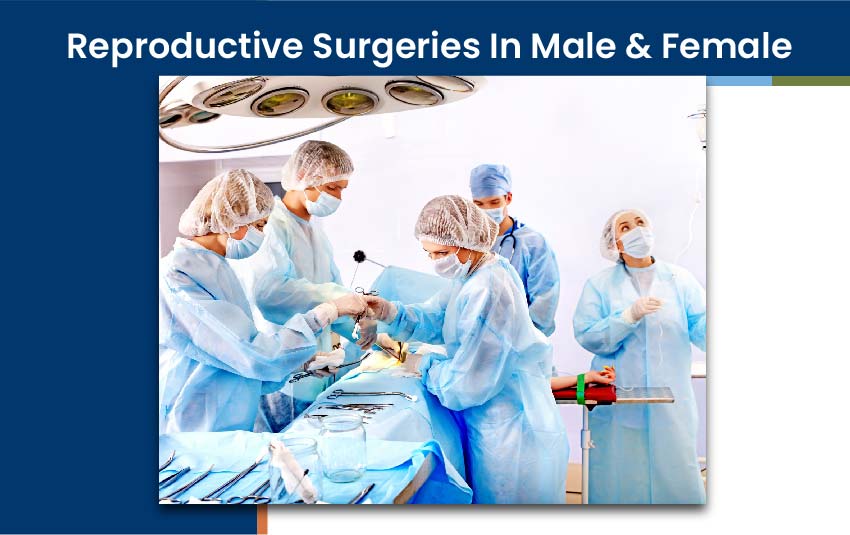
Reproductive surgeries refer to a range of procedures that are performed on the reproductive organs of both males and females.


In males, common reproductive surgeries include vasectomy (a form of permanent sterilization in which the vas deferens, the tubes that carry sperm from the testes to the urethra, are cut or blocked), and vasectomy reversal (a procedure to restore the flow of sperm). Other procedures include the repair of a varicocele (an abnormal dilation of the veins in the testicle), and testicular implants for men who have lost one or both testicles due to injury or cancer.


In females, common reproductive surgeries include tubal ligation (a form of permanent sterilization in which the fallopian tubes are cut or blocked), and tubal reversal (a procedure to restore the flow of eggs to the uterus). Other procedures include the removal of fibroid tumors (non-cancerous growths) from the uterus and surgical repair of a prolapsed uterus (a condition in which the uterus falls into the vaginal canal). Additionally, a hysterectomy (removal of the uterus) is a common surgery in reproductive health.


It’s important to note that many of these procedures are considered major surgeries and may carry risks and complications. It is important to discuss the risks and benefits of any procedure with experienced doctors before making a decision.

PGD/PGS

Pre-Implantation Genetic Screening(PGS) examines extracted cells from the embryo to screen for potential genetic conditions while there is no specific inherited disease. Whereas Pre Genetic Diagnosis uses a similar approach but only to examine a specific condition that has a high probability of being passed down from the parents to their offspring.


The advantage of this test includes minimizing the risk of passing a genetic disorder and increasing the chance of successful pregnancy and birth rate from IVF treatment. 


Infertility problems are prevalent among couples nowadays. And as the mother gets older, these problems only get worse. As a result, several remedies to this issue are offered to assist couples in starting kids. PGS is another therapeutic option offered by Orkid.