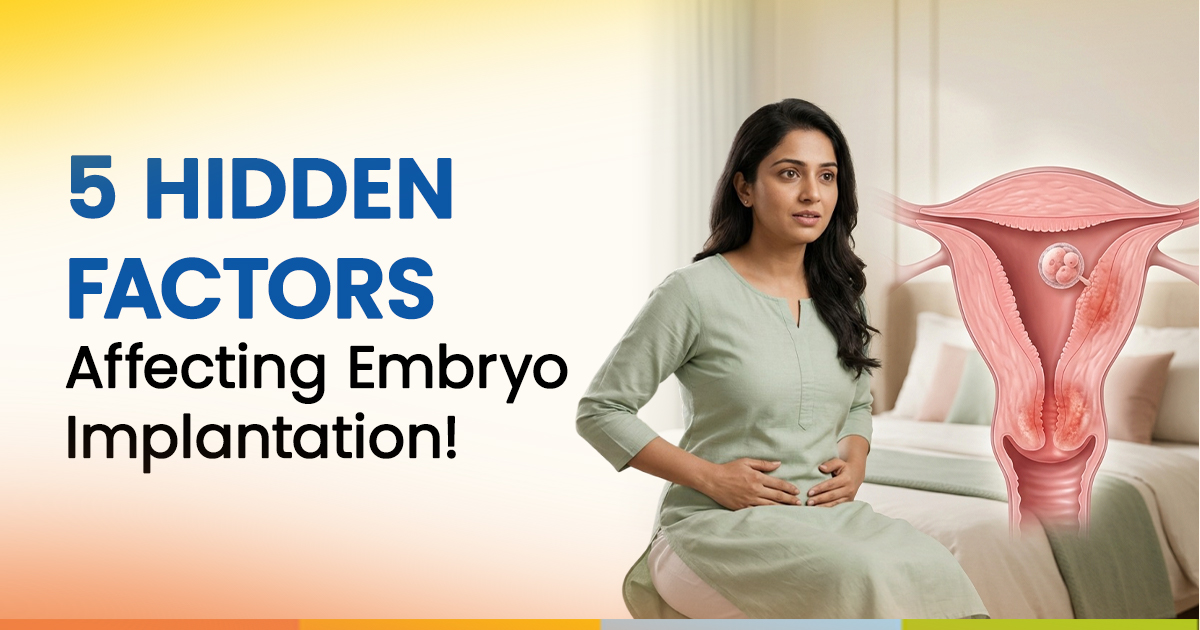
5 Hidden Factors Affecting Embryo Implantation!
For many couples undergoing fertility treatment, embryo transfer feels like the final step toward pregnancy. After weeks of medications, scans, egg retrieval, fertilisation, and embryo development, the hope is that the transferred embryo will successfully attach to the uterus.
But what happens when a good-quality embryo does not implant?
This question can be frustrating because embryo implantation is more complicated than simply placing an embryo inside the uterus. Successful implantation requires coordination between embryo development, the uterine lining, hormonal signals, and several biological processes.
Even when everything appears normal, implantation is not guaranteed.
Understanding the factors that influence implantation can help couples approach fertility treatment with realistic expectations and make informed decisions about their reproductive health.
What Exactly Happens During Embryo Implantation?
Embryo implantation occurs when a developing embryo attaches to and begins embedding itself within the uterine lining, called the endometrium.
During natural conception, fertilisation usually takes place inside a fallopian tube. The embryo then travels toward the uterus while continuing to develop.
In IVF treatment, fertilisation happens in a laboratory, and an embryo is transferred into the uterus at an appropriate developmental stage.
However, embryo transfer and embryo implantation are not the same thing.
After transfer, the embryo must interact with the endometrium, establish attachment, and begin the biological processes that support early pregnancy.
Several factors influence whether this happens successfully.
Here are five important factors that may affect embryo implantation.
1. The Uterine Lining May Not Be Receptive.
One of the most important factors in embryo implantation is the condition of the uterine lining.
The endometrium changes throughout the menstrual cycle in response to estrogen and progesterone.
During the first part of the cycle, estrogen helps the lining develop. After ovulation, progesterone prepares the endometrium for possible implantation.
There is a limited period during which the uterine lining is appropriately prepared to support an embryo. This is often called the window of implantation.
In fertility treatment, doctors carefully coordinate embryo transfer with the expected period of endometrial receptivity.
However, several conditions may interfere with the uterine environment, including:
- Endometrial polyps
- Certain uterine fibroids
- Scar tissue inside the uterus
- Intrauterine adhesions
- Some uterine abnormalities
These conditions may alter the uterine cavity or interfere with the normal implantation process.
A thin endometrial lining may also be associated with reduced pregnancy rates in some circumstances, although thickness alone cannot determine whether implantation will succeed.
A fertility specialist may recommend ultrasound monitoring or additional uterine evaluation when clinically indicated.
The goal is to identify treatable problems rather than assuming every unsuccessful transfer is caused by the uterine lining.
2. Embryo Quality Is More Complex Than Appearance.
Many couples believe that transferring a high-grade embryo should guarantee pregnancy.
However, embryo grading is only one part of the picture.
During IVF, embryologists assess embryos based on their development and appearance under laboratory conditions.
For blastocysts, grading commonly considers the degree of expansion and the appearance of different cell groups.
A well-graded embryo may have a higher chance of implantation than a poorly developing embryo, but appearance cannot reveal everything about its genetic makeup.
Some embryos that look healthy may contain chromosomal abnormalities that prevent normal development.
These abnormalities become more common as maternal age increases.
An embryo with an incorrect number of chromosomes may fail to implant, stop developing shortly afterward, or result in an early pregnancy loss.
This is one reason a successful embryo transfer does not always lead to a positive pregnancy test.
Preimplantation genetic testing may be considered in selected circumstances, but it is not necessary or beneficial for every patient and cannot guarantee pregnancy.
Couples consulting a top fertility specialist gujarat should receive clear explanations about embryo grading, age-related fertility changes, and the limitations of available testing.
3. Progesterone Levels Can Influence Implantation.
Hormones play an essential role in preparing the uterus for pregnancy.
Progesterone is particularly important because it helps transform the uterine lining into an environment capable of supporting an embryo.
In a natural menstrual cycle, progesterone is produced after ovulation by a structure called the corpus luteum.
During certain IVF protocols, progesterone supplementation is necessary because the body’s natural hormone production may not provide adequate support.
The timing, dose, and method of progesterone administration can influence the preparation of the uterine lining.
Depending on the treatment protocol, progesterone may be prescribed as:
- Vaginal medication
- Intramuscular injections
- Oral medication in selected circumstances
- A combination of methods
The appropriate approach varies according to the type of embryo transfer and individual medical circumstances.
For example, a medicated frozen embryo transfer cycle may require carefully scheduled progesterone exposure before the embryo is transferred.
Insufficient or poorly timed progesterone support may reduce the likelihood of successful implantation.
However, more progesterone is not automatically better.
Hormone treatment should be personalised and monitored by the treating medical team.
Patients should never change the dose or stop progesterone medication without consulting their doctor.
4. Hidden Uterine Inflammation May Matter.
Some women experience repeated unsuccessful embryo transfers despite apparently normal scans and good-quality embryos.
In selected cases, doctors may investigate whether inflammation or infection within the uterine lining could be contributing.
One condition that may be considered is chronic endometritis.
Chronic endometritis is persistent inflammation of the endometrium, sometimes associated with bacterial infection.
Unlike acute pelvic infections, it may produce few noticeable symptoms.
Some women experience abnormal bleeding or pelvic discomfort, while others have no symptoms at all.
Research suggests that chronic endometritis may be associated with reproductive difficulties in certain patients, although its exact role in implantation failure and the benefits of routine testing remain areas of ongoing study.
Diagnosis may require an endometrial biopsy with specialised examination.
Treatment depends on the findings and may involve antibiotics when an infection-related condition is confirmed.
Importantly, chronic endometritis should not be assumed to be present simply because an embryo transfer failed.
Routine testing or antibiotic treatment for every IVF patient is not supported by strong evidence.
An experienced fertility specialist can help determine whether further investigation is appropriate based on the patient’s history and previous treatment outcomes.
5. Maternal Health Can Affect the Implantation Environment.
Embryo implantation does not happen independently of the mother’s overall health.
Certain medical conditions may influence reproductive hormones, uterine function, or early pregnancy development.
These include:
Thyroid Disorders.
Thyroid hormones influence reproductive health and pregnancy.
Untreated or poorly controlled thyroid disease may affect ovulation, fertility, and pregnancy outcomes.
Women with known thyroid conditions may require appropriate monitoring before and during fertility treatment.
Diabetes and Blood Sugar Control.
Poorly controlled diabetes can affect reproductive health and increase pregnancy-related risks.
Optimising blood glucose before conception is particularly important for women with diabetes.
Obesity and Metabolic Health.
Obesity may influence hormonal regulation, inflammation, and reproductive outcomes.
However, body weight alone does not determine whether implantation will occur, and fertility treatment decisions should consider overall health rather than focusing only on weight.
Smoking.
Smoking is associated with poorer reproductive outcomes and may negatively affect both egg quality and the reproductive environment.
Stopping smoking before fertility treatment can support general and reproductive health.
Certain Medical Conditions.
Some uterine conditions, hormonal disorders, and chronic illnesses may require management before embryo transfer.
A comprehensive assessment at a fertility clinic can help identify medical concerns that deserve attention before treatment.
Does Stress Prevent Embryo Implantation?
This is one of the most common concerns among IVF patients.
Many women worry that anxiety, crying, working, travelling, or feeling emotionally overwhelmed after embryo transfer could prevent implantation.
However, there is no convincing evidence that ordinary emotional stress alone causes an embryo to fail to implant.
Fertility treatment can be emotionally demanding, and managing stress is important for mental well-being.
But patients should not blame themselves when a transfer is unsuccessful.
Relaxation, counselling, adequate sleep, and emotional support may make the treatment experience more manageable, but they are not substitutes for appropriate medical care.
Similarly, strict bed rest after embryo transfer has not been shown to improve IVF success rates.
Most patients can resume normal light daily activities according to their doctor’s instructions.
Can a Good Embryo Still Fail to Implant?
Yes.
Even an embryo with favourable laboratory grading may not implant successfully.
Embryo implantation involves biological processes that cannot be fully predicted or controlled.
Factors such as embryo genetics, endometrial receptivity, hormonal preparation, uterine conditions, and chance may all influence the outcome.
One unsuccessful embryo transfer does not automatically indicate a serious implantation problem.
Doctors generally consider the patient’s age, embryo characteristics, treatment protocol, medical history, and number of previous transfers before deciding whether additional investigations are necessary.
The term recurrent implantation failure is sometimes used when multiple embryo transfers do not result in pregnancy, but there is no universally accepted definition that applies equally to every patient.
This is why personalised assessment is more useful than applying the same testing package to everyone.
What Happens After an Unsuccessful Embryo Transfer?
When an embryo transfer does not result in pregnancy, the next step should be a structured review rather than immediately repeating every test.
The medical team may assess:
- Embryo development and grading
- Age-related fertility factors
- Uterine cavity findings
- Endometrial preparation
- Progesterone timing and support
- Previous pregnancy history
- Medical conditions
- Details of the embryo transfer procedure
Depending on the findings, the doctor may recommend continuing with a similar protocol, adjusting treatment, or investigating a specific concern.
Not every unsuccessful transfer requires a completely different treatment approach.
Couples should also be cautious about expensive add-on procedures marketed as solutions for implantation failure.
Some tests and treatments have limited evidence of improving live birth rates and may not be appropriate for routine use.
How Can Couples Prepare for Embryo Transfer?
Although no preparation method can guarantee implantation, certain steps can support a well-managed fertility treatment cycle.
These include:
- Follow prescribed medication schedules. Hormonal preparation and progesterone timing are particularly important in some transfer protocols.
- Attend recommended monitoring appointments. Ultrasound examinations and selected blood tests help the team assess treatment progress.
- Manage existing medical conditions. Diabetes, thyroid disorders, and other health concerns should be appropriately controlled.
- Avoid smoking and alcohol. These substances can negatively affect reproductive and pregnancy health.
- Discuss all medicines and supplements. Some products may interfere with treatment or be unsuitable during pregnancy.
- Maintain realistic expectations. Even carefully planned treatment cannot guarantee implantation.
- Follow the pregnancy-testing schedule. Testing too early can produce misleading results, particularly when fertility medications have been used.
Choosing a reliable fertility clinic with experienced doctors, embryologists, and appropriate laboratory standards can help ensure that each stage of treatment is carefully managed.
When Should You Seek a Second Opinion?
A second opinion may be helpful when couples have experienced multiple unsuccessful embryo transfers, do not understand the proposed treatment plan, or have concerns about repeated investigations.
It can also be useful when expensive additional procedures are recommended without a clear explanation of their benefits and limitations.
When consulting a top fertility specialist gujarat, couples should ask questions such as:
- What is the most likely reason for the unsuccessful transfer?
- Is there evidence of a uterine or hormonal problem?
- Are additional tests necessary?
- What would change in the next treatment cycle?
- Which recommended procedures have proven benefits?
- What are the realistic chances of success?
Clear communication can help couples make informed decisions without feeling pressured into unnecessary interventions.
Final Thoughts
Embryo implantation is one of the most complex stages of reproduction.
The condition of the uterine lining, embryo genetics, progesterone support, certain uterine inflammatory conditions, and maternal health can all influence the possibility of successful implantation.
However, an unsuccessful embryo transfer does not automatically mean that something is seriously wrong.
Even with careful preparation, healthy embryos, and appropriate treatment, implantation cannot be guaranteed.
Couples should avoid blaming themselves or assuming that every unsuccessful cycle requires extensive testing.
Consulting an experienced fertility specialist, choosing a trusted fertility clinic, or seeking guidance from a top fertility specialist gujarat can help identify relevant concerns and determine whether treatment adjustments are necessary.
At Oorkid Hospital & IVF Centre, fertility care focuses on understanding each patient’s reproductive health, evaluating possible barriers, and supporting informed treatment decisions.
Successful fertility treatment is not simply about transferring an embryo. It is about carefully coordinating embryo development, uterine preparation, hormonal support, and individual medical needs while recognising that every fertility journey is different.